Residential Proxies Unlock Accurate Regional Pricing and Web Scraping Benefits
· based on the channel Lukas Margerie
Key takeaways
- Residential proxies route traffic through real home ISP IPs, not data centers
- They enable access to geo-targeted content and regional pricing
- Rotating residential proxies provide fresh IPs per request
- Residential proxies reduce blocking risks during web scraping
- Claude Code agent uses residential proxies for pricing analysis across countries
Residential proxies provide a powerful solution for accessing region-specific web content by routing requests through real home internet connections. Unlike VPNs that use data center IP addresses often flagged by websites, residential proxies use IPs assigned to residential ISPs, allowing users to appear as genuine local visitors. This makes residential proxies essential for uncovering hidden or regional pricing, enabling accurate web scraping, and bypassing geo-restrictions.
What Are Residential Proxies and How Do They Work
Residential proxies are proxy servers that route internet requests through IP addresses assigned to real households by Internet Service Providers (ISPs). Each request sent through a residential proxy exits via a device connected to a genuine home network in the targeted country, making it indistinguishable from a typical user's access. This contrasts with VPNs or data center proxies, which use centralized IP ranges often blocked or flagged by websites for suspicious activity.
Residential proxies are widely used for tasks like price comparison, ad verification, and web scraping where the geographic origin of traffic matters. They allow users to bypass location-based restrictions and view localized content or pricing without manual intervention.
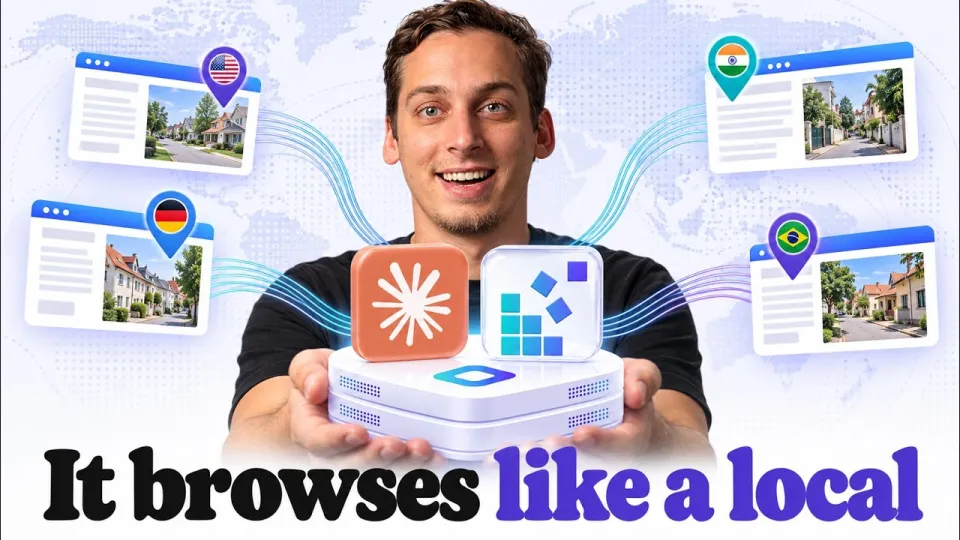
Video: This Claude Code Agent Uses Residential Proxies to Find Hidden Prices
VPN vs Residential Proxy: Key Differences
While both VPNs and proxies mask your IP, their infrastructure and use cases differ significantly:
- VPNs route all your internet traffic through a single server, usually a data center IP. This can lead to websites detecting and blocking access because data center IPs are commonly associated with automated traffic.
- Residential proxies send each request through a different residential IP address, often rotating IPs to reduce the risk of detection.
- Residential proxies support granular geo-targeting by selecting IPs from specific countries or regions, making them ideal for localized content access.
Due to these differences, residential proxies are more effective for web scraping and accessing region-specific pricing without manual checks or VPN switching.
Rotating Residential Proxies and Their Advantages
Rotating residential proxies assign a new IP address for every connection or request, enhancing anonymity and reducing the risk of bans. This rotation ensures that scraping tools or agents appear as multiple distinct users rather than one repeated IP address.
Benefits include:
- Reduced blocking: Websites are less likely to detect scraping activity when requests come from varied IP addresses.
- Better geo-targeting: IPs can be rotated across different countries or cities as needed.
- Improved data accuracy: Allows seamless access to localized pricing or content without manual intervention.
Services like DataImpulse provide robust residential proxy networks with easy country targeting by appending suffixes in usernames, enabling automated agents to request data from multiple regions in one session.
Using Residential Proxies for Web Scraping and Price Comparison
Web scraping with residential proxies involves sending automated requests to websites through IPs that appear as genuine users from different locations. This method is especially useful for SaaS pricing analysis, e-commerce price monitoring, and market research.
A practical example is the Claude Code agent by Lukas Margerie, which uses residential proxies from DataImpulse to open pricing pages from countries like the US, Germany, Brazil, and India. This process involves:
- Selecting residential proxies from desired countries.
- Employing Playwright automation to open pricing pages as local users.
- Extracting and compiling pricing data for comparison.
This approach revealed stark price differences such as Spotify Premium costing $12.99/month in the US but about $1.45 in India, and Canva Pro priced at $144/year versus $42 in other locations. It shows how SaaS companies implement regional pricing strategies that can only be reliably analyzed using residential proxies.
How to Choose and Use the Best Residential Proxies
When selecting residential proxies, consider:
- IP pool size and diversity: Larger pools reduce the chance of repeated IP use and bans.
- Geographic coverage: Ensure proxies are available in all target countries.
- Rotation options: Automatic IP rotation per request or session is crucial for scraping.
- Speed and reliability: High-performance proxies prevent scraping delays.
- Transparency and pricing: Understand usage limits and costs.
DataImpulse stands out as a provider offering easy country targeting and rotating residential proxies optimized for web scraping, making it suitable for projects requiring multiple region data extraction.
Common Questions About Residential Proxies
Many users wonder about the differences and applications of residential proxies compared to VPNs or data center proxies. Residential proxies are more costly but offer superior access to geo-specific content without triggering anti-bot mechanisms. They are essential tools for marketers, researchers, and developers needing authentic local IPs.
Useful Links
- DataImpulse residential proxies for web scraping and geo-targeting: https://dataimpulse.com/?utm_source=youtube&utm_medium=video&utm_campaign=lukasmargerie
- Claude Code AI agent for automated scraping: https://www.claude.com/product/claude-code
- Playwright automation framework: https://playwright.dev
- CreatorNTWRK Discord community: https://discord.com/invite/vZxn6wZrDD
- Builderz Gym Skool community: https://www.skool.com/builderzgym
Conclusion
Residential proxies are indispensable for accessing true regional pricing, performing reliable web scraping, and bypassing geo-restrictions. By routing traffic through real home ISP IPs, they provide undetectable local presence, enabling tools like the Claude Code agent to uncover pricing variations across countries automatically. For anyone involved in SaaS pricing analysis, market research, or geo-targeted content delivery, residential proxies from providers like DataImpulse offer a powerful and effective solution. Explore their service to boost your scraping or regional pricing intelligence today.
This article is based on the detailed analysis by Lukas Margerie, whose work demonstrates the practical applications of residential proxies in uncovering hidden prices worldwide.
Questions & answers
What is the main advantage of residential proxies over VPNs?
Residential proxies use real home ISP IP addresses, making them appear as genuine local users. This reduces the chance of being blocked or flagged by websites, unlike VPNs that often use data center IPs which are easily detected.
How do rotating residential proxies improve web scraping?
Rotating residential proxies assign a new IP address for each request, spreading traffic across many IPs. This reduces the risk of detection and blocking, enabling more reliable and uninterrupted web scraping sessions.
Can residential proxies help access regional pricing differences?
Yes, residential proxies allow users to appear as if they are browsing from specific countries or regions, enabling access to localized pricing and content that would otherwise be hidden or restricted.
Are residential proxies suitable for all web scraping tasks?
Residential proxies are ideal for tasks requiring geo-targeting and high anonymity. However, they tend to be more expensive than data center proxies, so the choice depends on the specific scraping needs, budget, and target websites.
Source: This Claude Code Agent Uses Residential Proxies to Find Hidden Prices · Markdown version